Part 2
Introduction
Part One examined reported OSF funding and questions about political influence. This part examines criticism in India and reporting on the 2025 foreign-exchange inquiry. Grants, political criticism, investigative allegations and court findings are different kinds of evidence. The argument here is for scrutiny; it does not establish that funding caused national unrest.
The foundation's India fact sheet says its work with civil-society groups in India began in 1999. That is a statement about the start of its work, not proof of an office opening or unlawful political activity.
This is proof from a documentary taken from his own Open Society Foundation website, but no specific places are mentioned on this website. This is the starting point of that.
The Criticisms About George Soros in India
We have seen many criticisms about Soros and Soros funds. The main thing to watch out for is the year 2023.
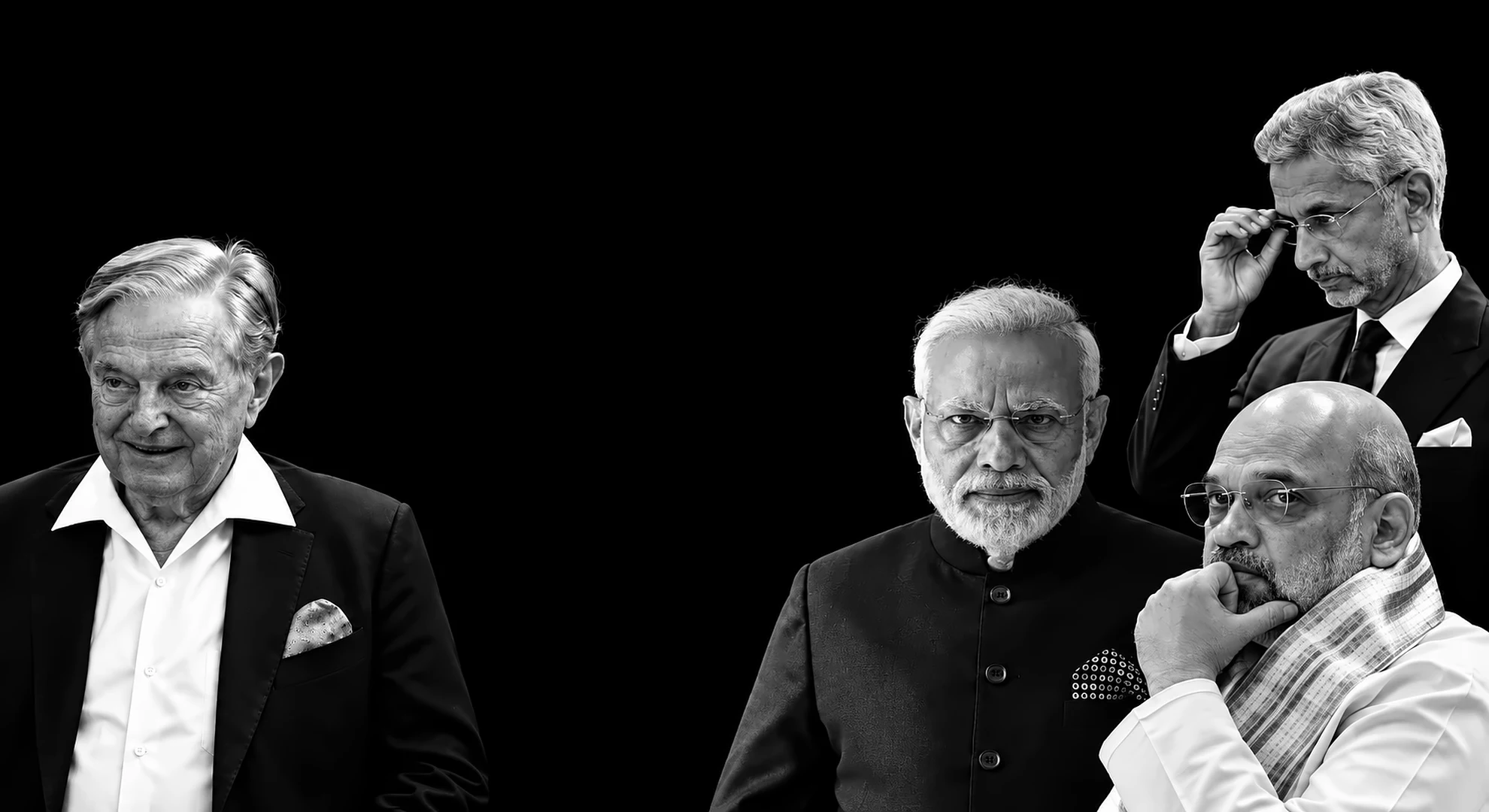
This data statement says there was a bid to destroy Indian democracy and install a pliable government; BJP's Smriti Irani slams billionaire investor George Soros. This is a major statement of criticism.
The next thing to watch out for is the Lok Sabha election of 2024, but did Soros create conflict in India during 2023 with the Adani controversy to weaken the current ruling government?
This is April 11, 2023, news data taken from The Indian Express. External Affairs Minister S. JAISHANKAR calls him “dangerous,” and this news data says he is the biggest name in global philanthropy, and India is a major donor to UN funds that give money to pro-democracy organisations that are linked to him. This is also a major statement of criticism of Soros.
The Indian Express investigation of 11 April 2023 discusses India's contributions to the UN Democracy Fund and connections involving some recipient organizations. It does not report that Jaishankar called Soros India's largest donor. That distinction matters when assessing the argument about foreign funding.
The George Soros Fund Cases in India
1. The OSF-FCRA Case
The government’s concern was that OSF had been placed under the Prior Reference Category, meaning that its foreign contributions required advance approval. The ED alleges that some funds were instead brought into India as FDI or consultancy payments and later used for NGO-related activities.
This is an investigation-stage allegation, not a final judicial finding.
The purpose of OSF in India, according to Open Society Foundations itself, was philanthropic: supporting civil-society work in public health, justice-system reform, human rights, and disability rights. The purpose of the FCRA/PRC restriction was different: to ensure that foreign money going to Indian NGOs was subject to prior government scrutiny and was not used in violation of Indian law.
2. Wider ₹300 Crore Funding Trail
ThePrint's April 2025 reporting, attributed to ED sources, described an approximately Rs 300 crore wider investment trail and about Rs 25 crore received by three firms. These are reported preliminary findings. They should not be read as a judicial determination that every investment was unlawful or political funding.
The reported ₹300-crore funding trail refers to investments made by the Soros Economic Development Fund (SEDF)—the social-impact investment arm connected with OSF—to more than 12 Indian entities. Its stated or apparent purpose was social-impact investment, not necessarily direct charity or political funding.
These two cases are the main cases involving Soros and are very important to watch. For the 2025 ED RAID, see details in the next topic.
ED Raid of OSF Funds in 2025
The cited 2025 reports describe ED searches and a FEMA inquiry involving entities alleged to have received Soros-linked funding. ED describes FEMA as a civil foreign-exchange law. The investigation should not be described as a conviction or as proof that George Soros personally committed an offence.
The inquiry focused on whether money from OSF and the Soros Economic Development Fund, routed as FDI, consultancy fees or service payments, was ultimately used to fund Indian NGOs in ways that could breach FEMA and possibly FCRA rules. By 2 April 2025, reports said ED had traced such flows to three Indian firms: Rootbridge Services, Rootbridge Academy, and ASAR Social Impact Advisors.
Media described this as action against entities allegedly linked to or funded by OSF, not as a case establishing that George Soros himself was charged or found guilty. The 2025 ED action followed the intense December 2024 parliamentary row in which BJP leaders accused Soros-linked networks of trying to influence or destabilize Indian politics.
In our perception, these funds have cases under the FCRA Act of regulation, and the FCRA BILL [regulation] amendment bill, 2026, was introduced in the Lok Sabha on 25 March 2026.
This is the main reason why the FCRA bill is important for our nation and for protecting our nation from funds of this kind.
The official account of the bill's introduction records a legislative proposal on 25 March 2026. This review has not established a verified link between a named protest, Soros funding and a plan to overthrow the government. A protest or objection to a bill is not, by itself, evidence of foreign direction.
Conclusion
This is all seen in the topic: how Soros funds influence India and how the funds have cases under the FCRA Act. This can be taken to understand what is happening in India and how the FCRA bill is important to our nation. These are taken from the news data statements.
The question for further investigation is whether particular transfers complied with Indian law and what the evidence shows about their use. This case study does not establish that Soros created a political party or directed a plan to destroy India. My policy view is that transparent funding and independently tested evidence are essential to public trust.
© 2026 Aksayan Gaudham, Pradeepram. Published on Solithra.